Tag Archives: Grand Surrey Canal

New Canal Walk Launched

Image credit: J.H.Kennedy

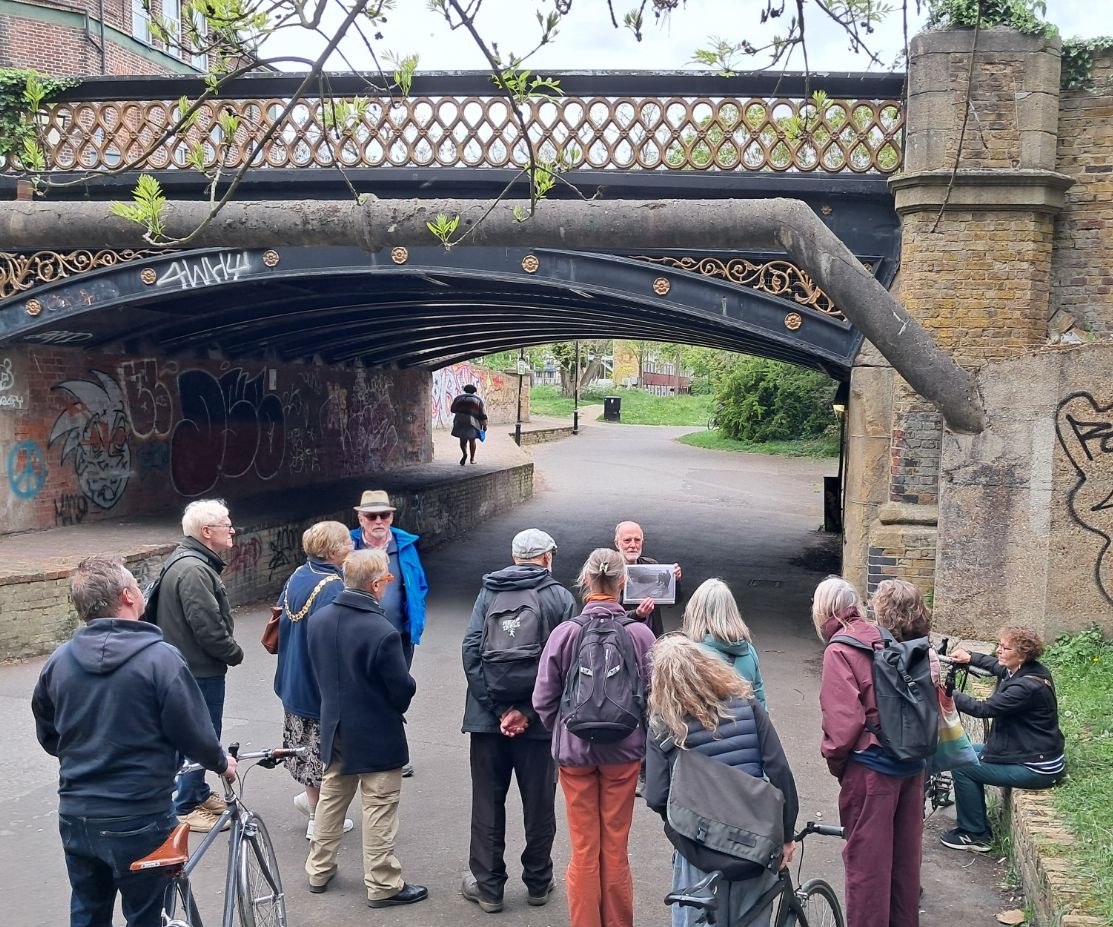
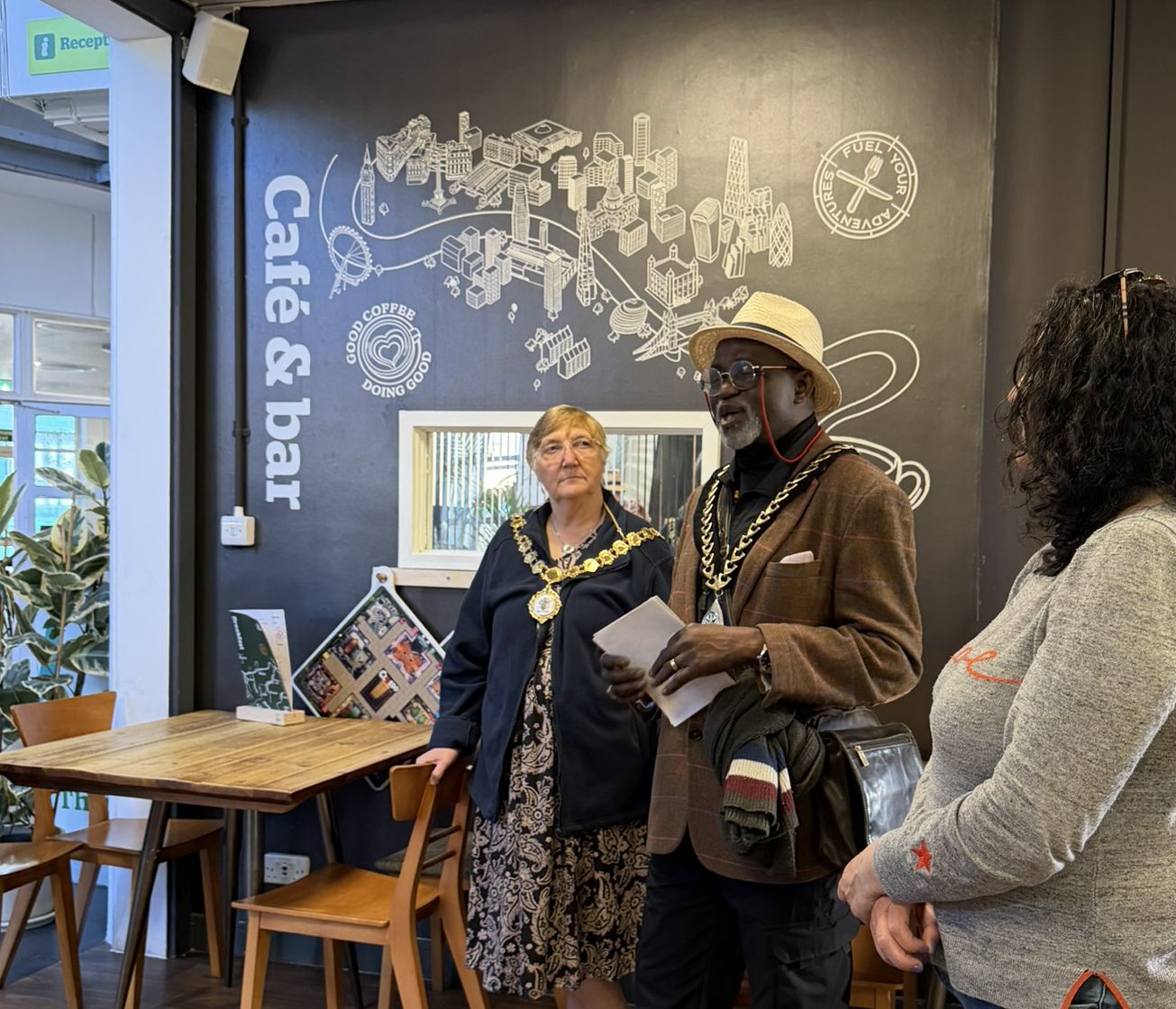
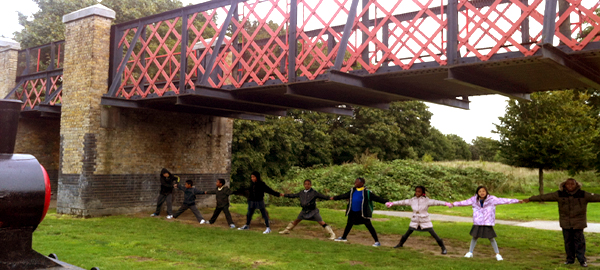
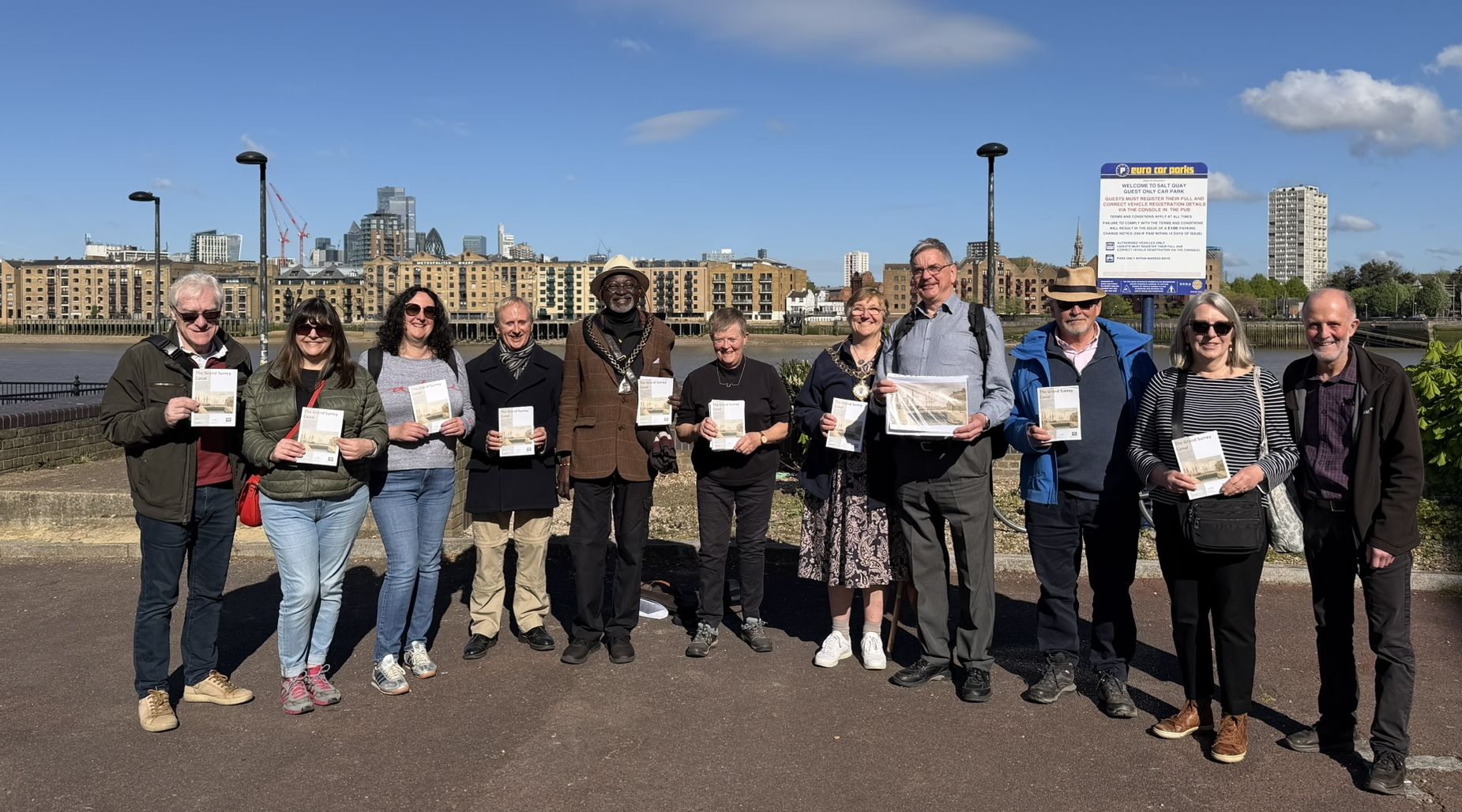
A group of keen walkers tried out the new self-guided walk on the former route of the Grand Surrey Canal on 20th April 2026. The walk was proposed and organised by Amanda Squires (above, centre) of the Our Rotherhithe group. The walking group was honoured to have the presence of Cllr Dr Sunny Lambe, Mayor of Southwark, and Cllr Jacq Paschoud, Speaker of Lewisham Council (above, either side of Amanda).

The walk begins in the former Surrey Docks, at the point where the canal connected with the Thames, and follows most of the canal’s route to Camberwell and Peckham. The guide takes the form of a leaflet (held by the walkers, above) or a pdf download for mobile devices. Details of the walk are on our page here.
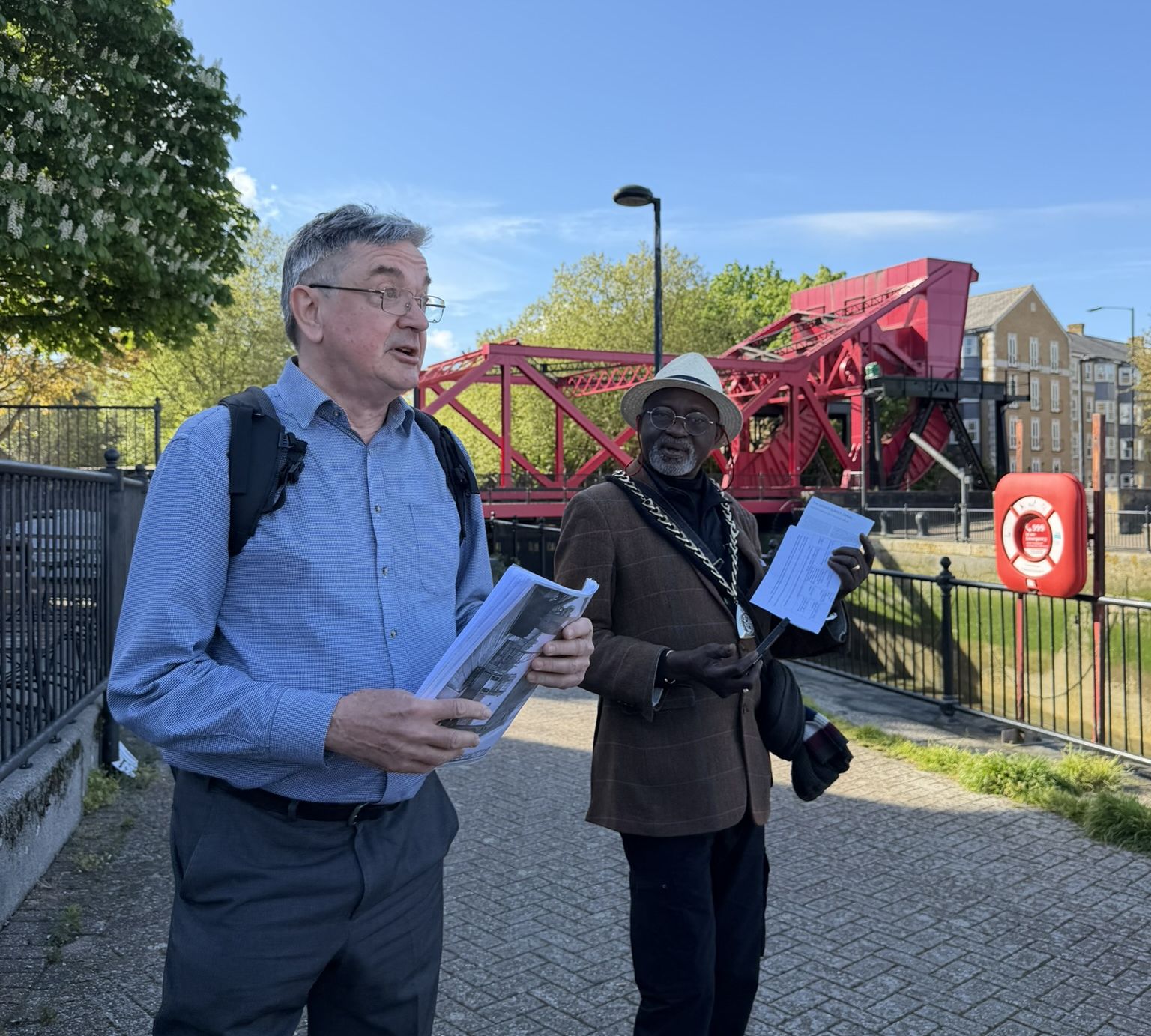
Image credit: J.H.Kennedy

At various points along the walk, guide authors Geoff Fairbairn, Hilary Bolton and Andrew Pearson gave details and showed pictures of the heritage of the canal and wharves. Participants also provided a lot of personal memories, so everyone learnt something new!

It’s over to you now – download the guide or pick up a printout at various points and see history for yourself!
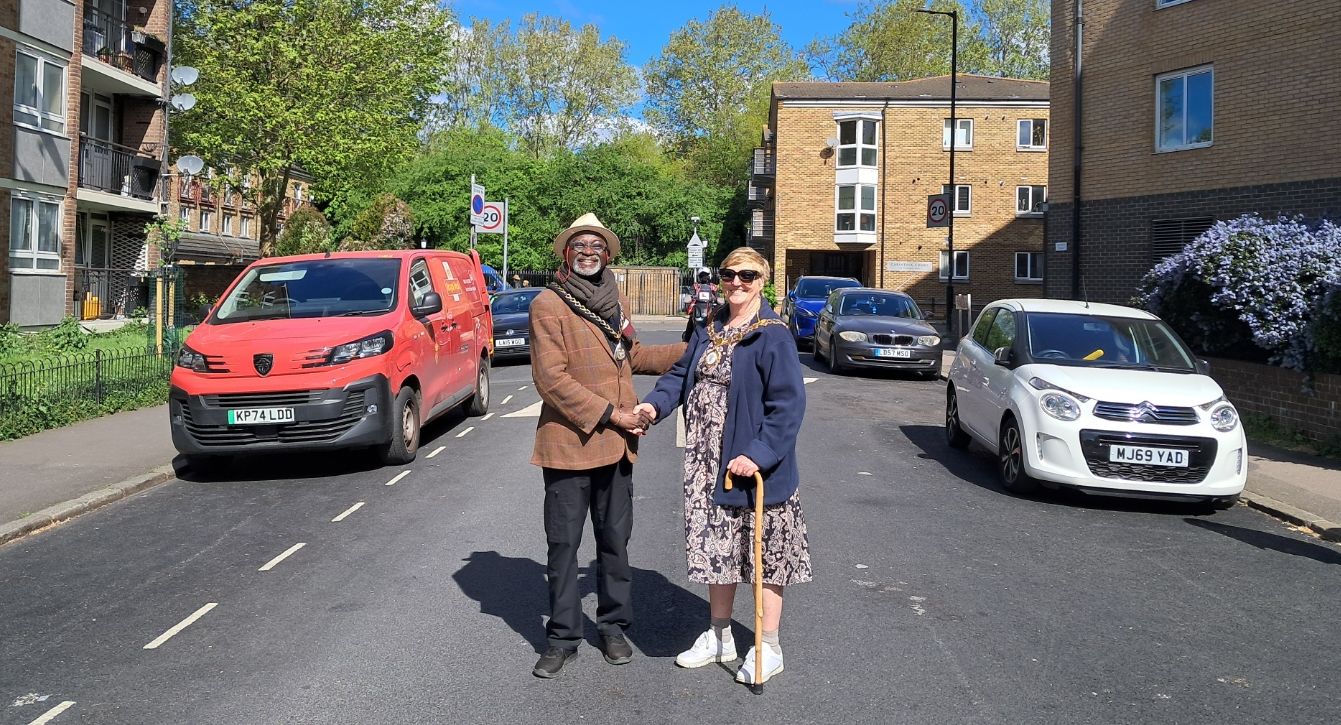
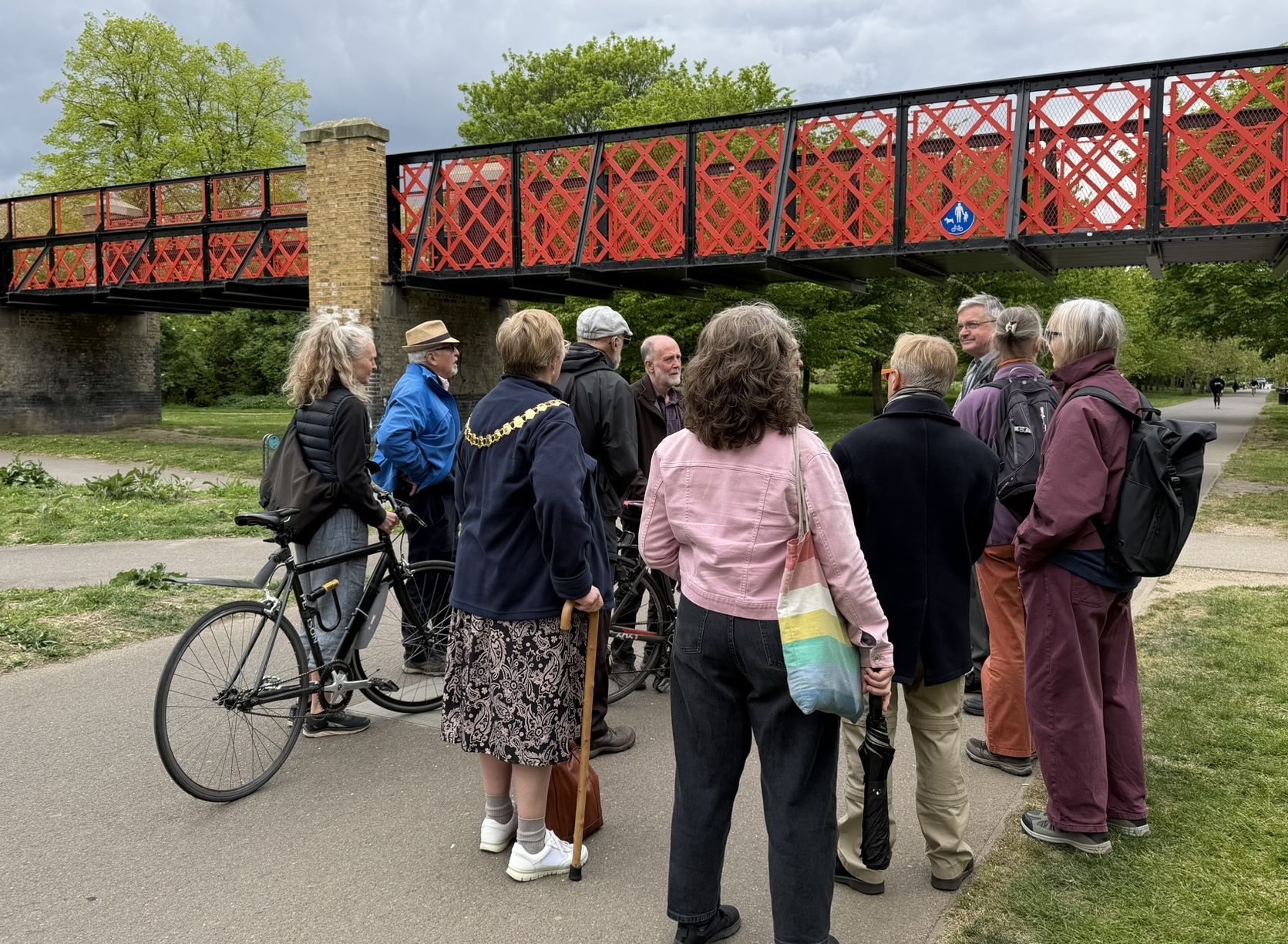
Above, L-R: representatives of Southwark and Lewisham councils stand on the borough boundary line, on Yeoman St, Rotherhithe, close to the canal route; the group hears about Burgess Park canal bridges; the mayor of Southwark, Cllr Sunny Lambe says a few words at the start in Rotherhithe Youth Hostel
New Image of Bridge to Nowhere

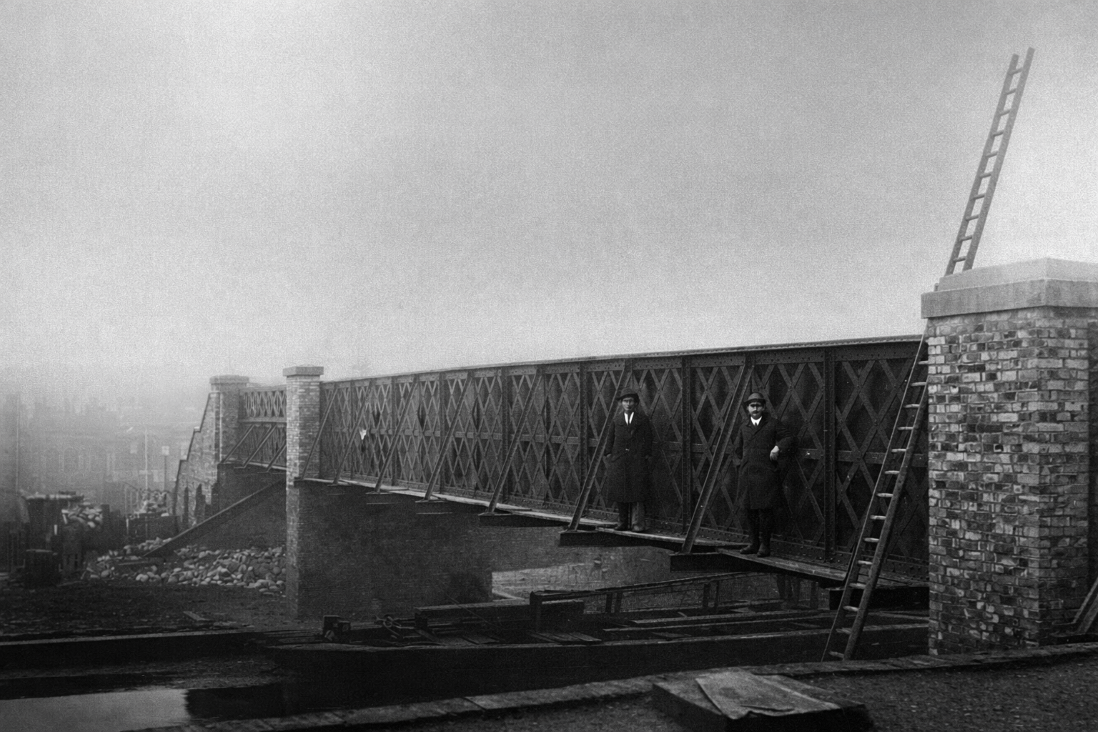
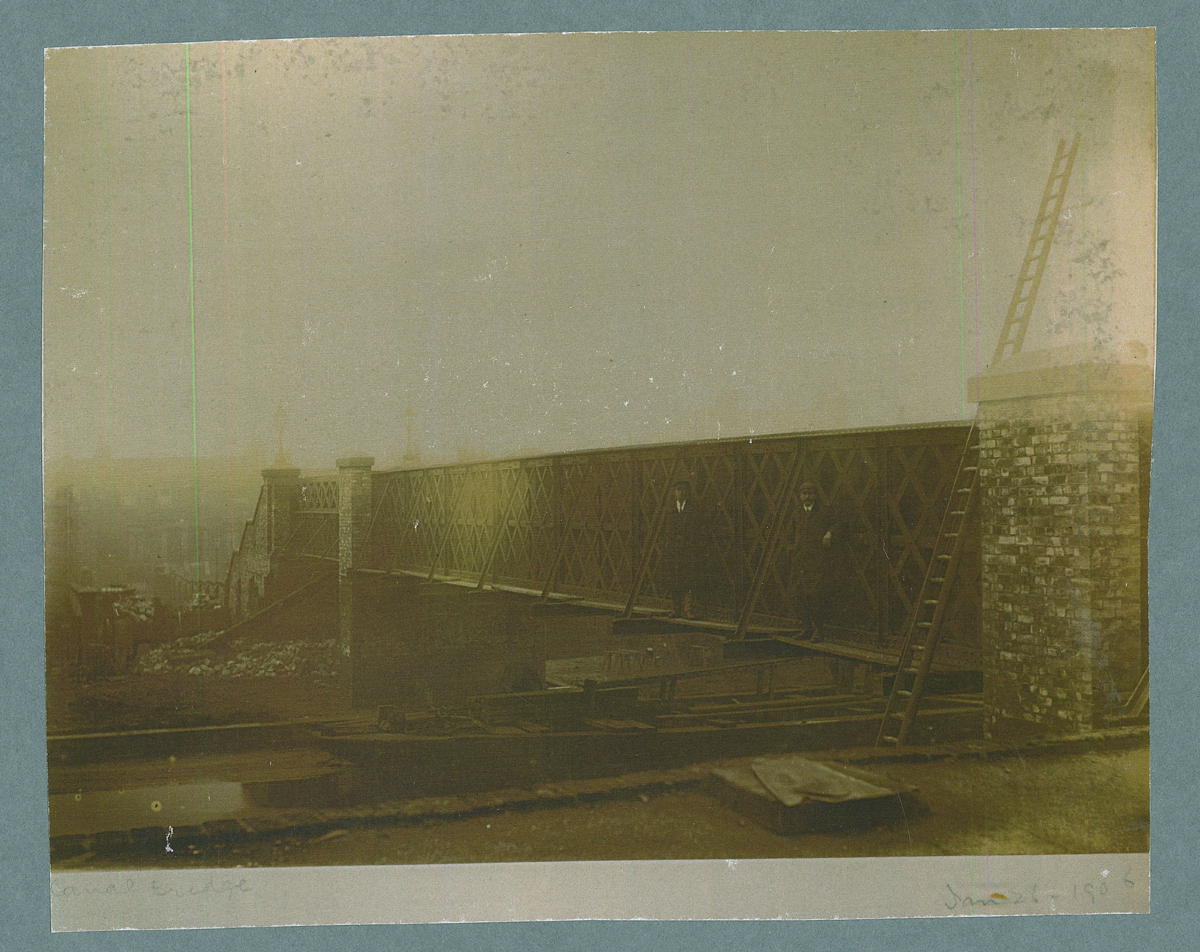
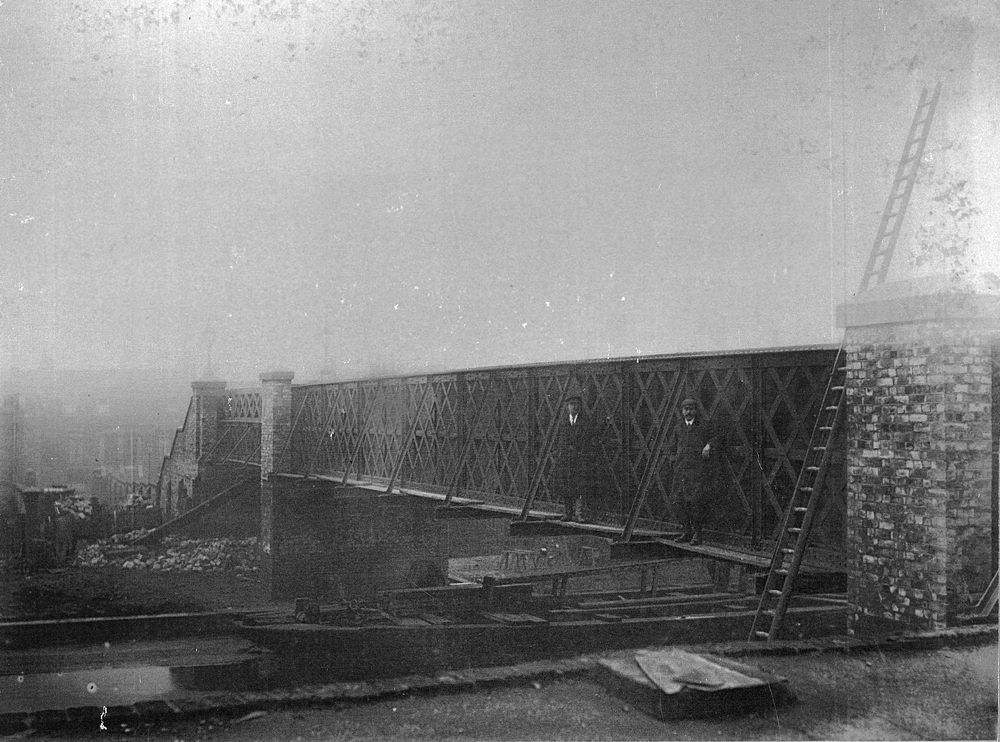
A fresh image of the Bridge to Nowhere taken during its construction has just come to the attention of this website. The image appears to have been taken as the bridge was almost complete, probably just before its opening, in the winter of 1905/6.

P 22987 ‘Surrey Canal Bridge’

The image appears in a Camberwell Book of Photographs dated 1906, put together by Camberwell Borough Council, and now part of Southwark Archives, with the reference RES OS 942.1642. The full story of the construction can be found on our page on the Bridge here.

The photograph is taken from on top of a building on the north side of the canal, looking across to the houses on St George’s Way (just visible on the left). The building would have been the sheepskin/fleece factory of Strong and Rawle at that time. This section of the canal has clearly been drained to aid the construction, with a lighter (barge) placed underneath, presumably to allow access over the otherwise muddy canal bed.

Manually Enhanced image:

AI Enhanced image:

Did you spot the two gents standing on boards on the side of the bridge? Presumably working on the bridge, nevertheless they have turned out very smartly for the photographer, in suit and tie! Or perhaps they’re foremen, or one of them is even the Borough Engineer, William Oxtoby, who designed the bridge.

Trafalgar Avenue bridge

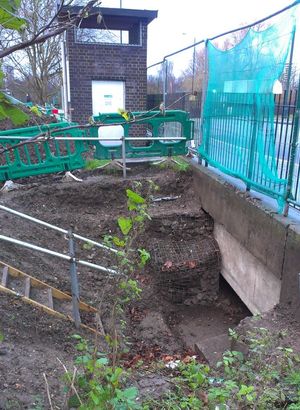
Yes – there is still a bridge taking Trafalgar Avenue over the route of the former Grand Surrey Canal! It was news to this author that the slight rise in the road where it crosses the park disguises a modern concrete replacement bridge, not merely a pile of demolished buildings.

Early Glimpse
A first glimpse of the bridge appears in 2016

It’s not quite clear (maybe someone can explain) why an expensive bridge was built, although the canal had been filled in in 1970.

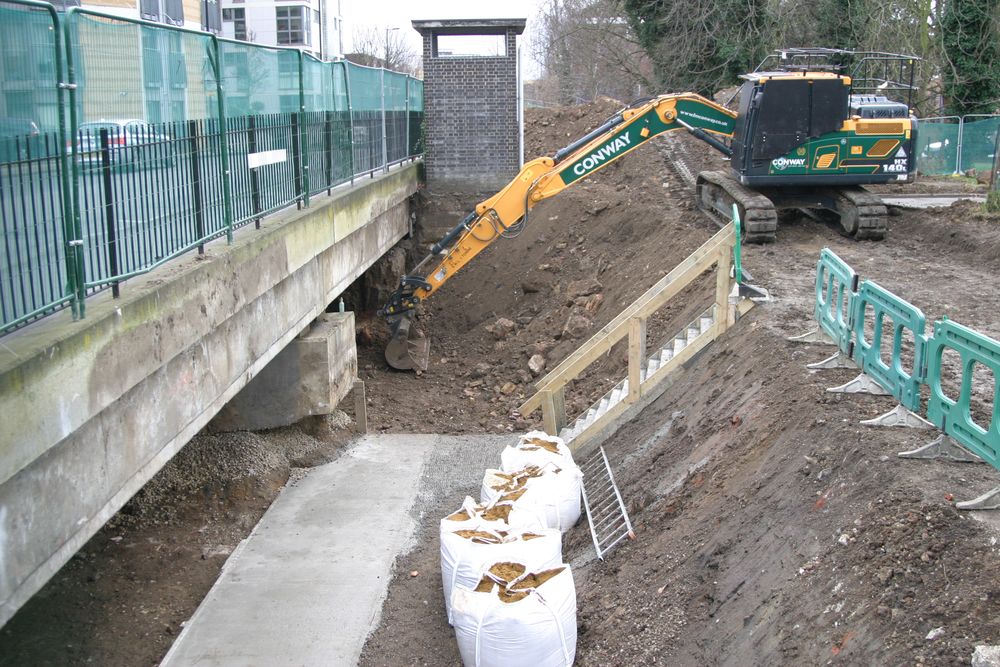
Unfortunately, bridges need inspecting periodically, and when that time came around last year, it proved to be a bigger task than at first envisaged.

Typically for the development of the park, it was discovered that the void beneath the bridge had been used to dispose of all kinds of waste, including asbestos.

Works have therefore taken quite some time, and the whole space beneath has been excavated in order to build permanent inspection chambers, so that in future, the job will be a bit easier.

Cleared space beneath 2 bays of the bridge
Under-bridge area cleared – visualise a canal now?!

The brick tower next to the bridge above is a ventilation chamber for the 132kV London electricity ring-main, cables for which were laid under the park as it was being developed in the 60s or 70s.

Of course, an imaginative administration might have thought about the posibility of restoring some water to the area, in some sort of memorial to the days of the canal. However, a brick-built inspection chamber is going in and the whole are will be backfilled and restored to grass.

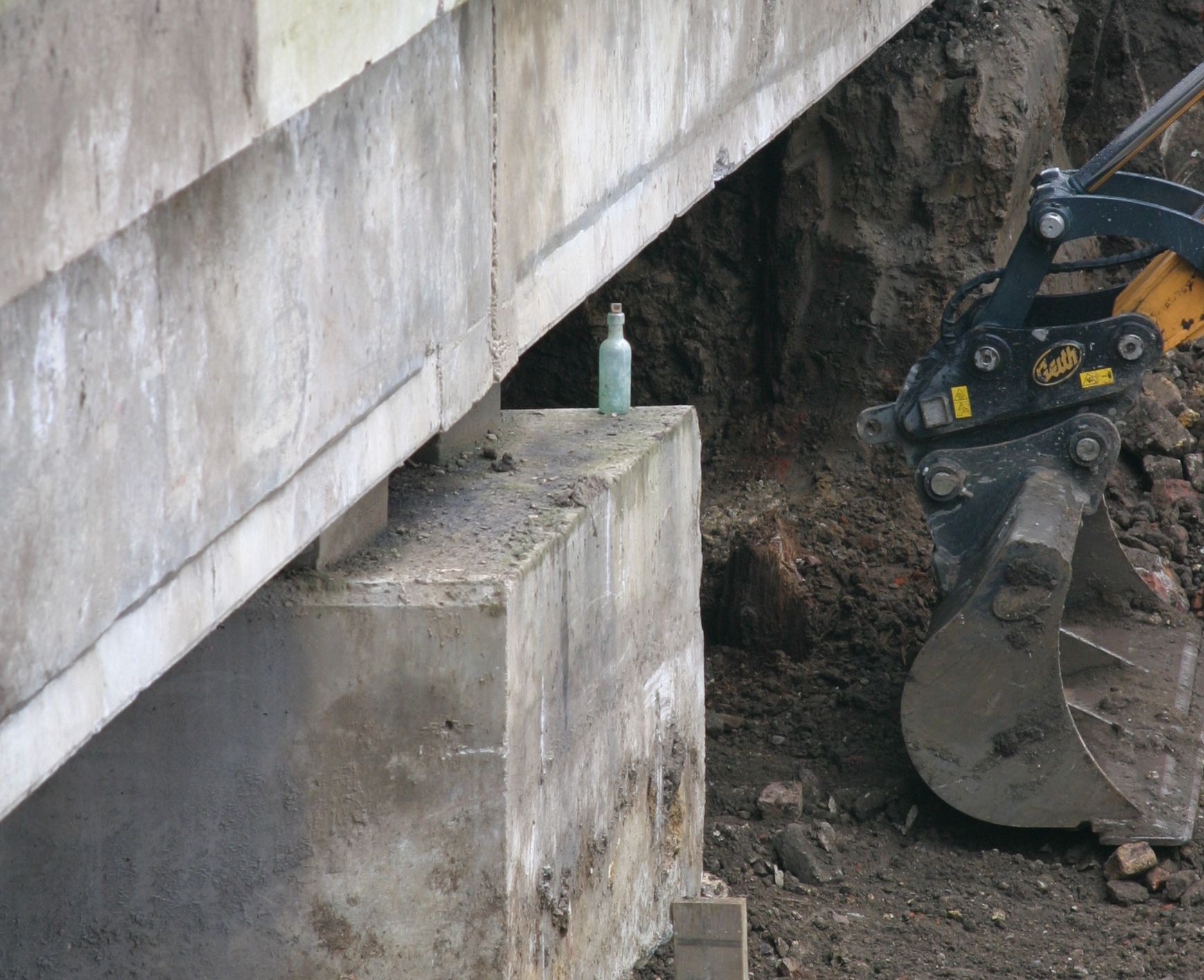
Glass bottle
Archaeological find


Did you spot the ubiquitous R Whites lemonade bottle in the image above? Somehow recovered intact, despite the heavy earth-movers, these can be found all over the park, wherever a hole is dug.


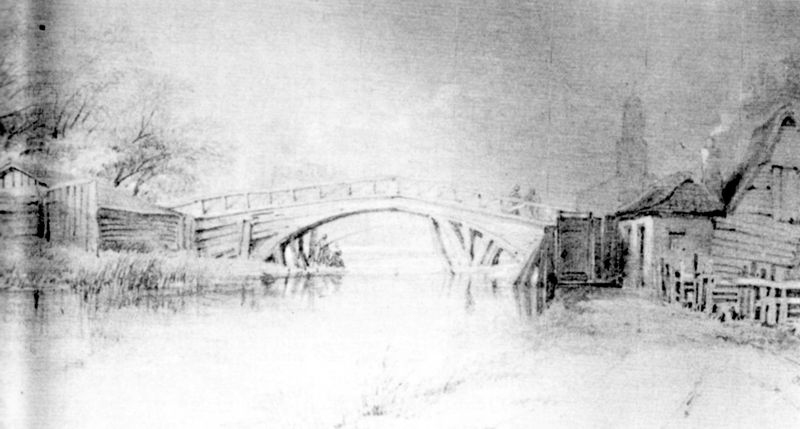
Wooden hump-back bridge over canal
1830 view of what was probably the first Trafalgar bridge, looking west. Glengall wharf and the Peckham branch are behind the artist/extreme left. St Georges church in the background


Council to demolish last vestiges of canal

Southwark Council has decided that the original retaining wall of Glengall Wharf should be replaced with a concrete block barrier similar to those used on motorway embankments. Flowers and plants in the gaps will look ‘nice’, but effectively erase any idea of a canal bank.

Showing old wall with rear of Glengall Terrace behind Glengall Wharf Garden
Original wall of Surrey Canal round Glengall Wharf

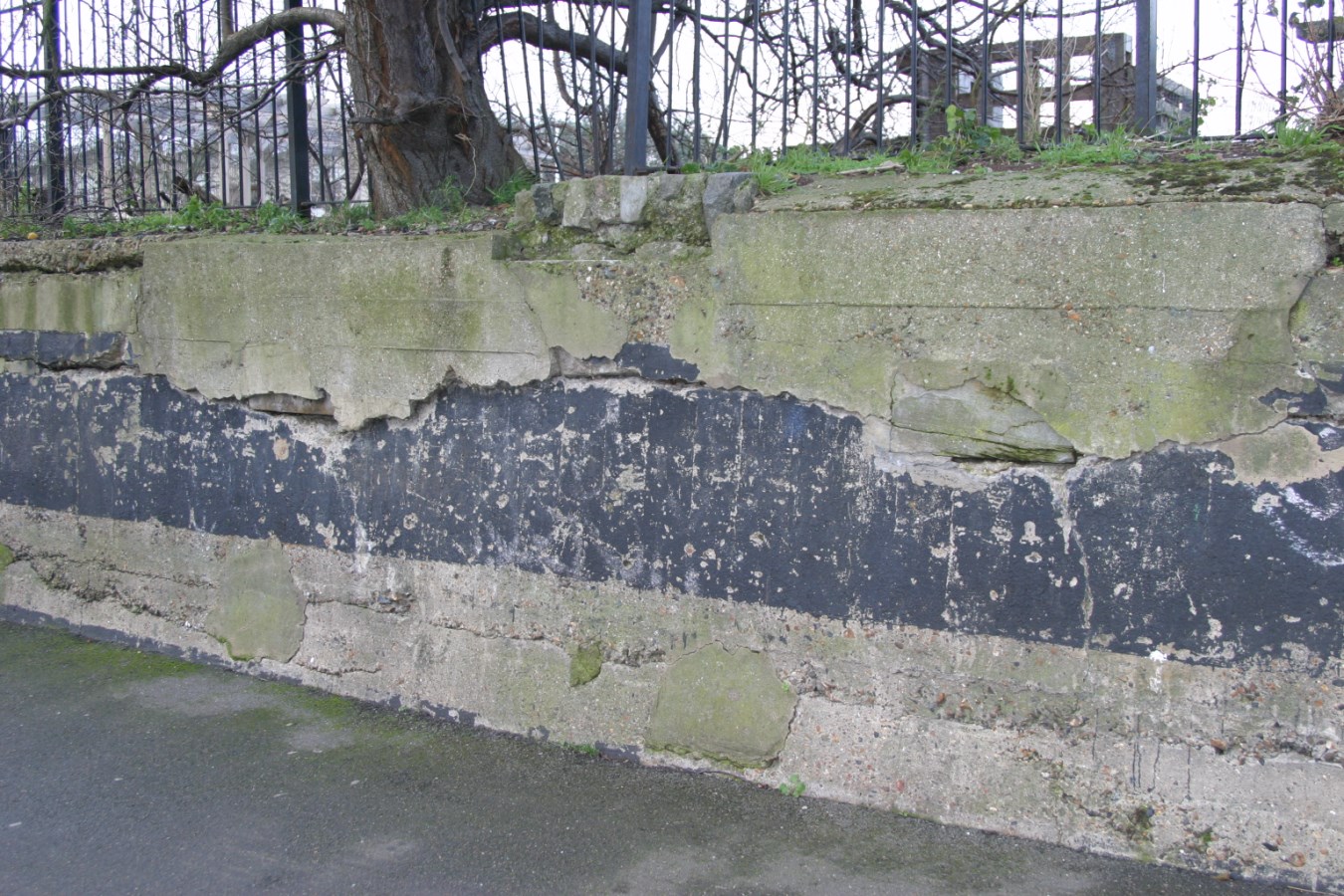
The existing wall is certainly not pretty, but it’s a major piece of industrial archaeology from the days when the canal ran alongside and turned down towards Peckham. Apart from the small low concrete ledge in the grass oppposite, it’s the only piece of original canal bank left on the entire three and a half mile length of the Grand Surrey Canal. It features in numerous historic photos of the area.

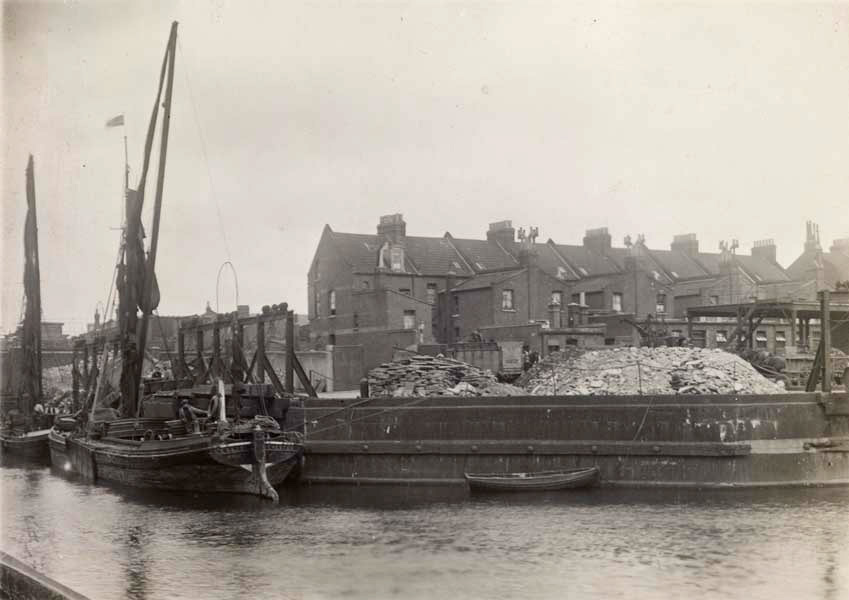
Black paintede wall around wharf, with 2 sailing barges
Glegall wharf around 100 years ago. ©Museum of London

In this image, you can see the black painted wall with timber fenders attached part way down. In the present-day image above and below, the black painting is still visible, with plain concrete below, where the fenders had been attached.

Two stone blocks just visible, embedded in concrete

It’s also still possible to see large stone blocks embedded in the wall, if you take a walk today. These were the footings of the large loading chutes visible in the historic image. There are 12 visible on the Peckham route, corresponding to the 6 loading chutes which were on that side of Glengall Wharf.

It seems a great shame to bury almost the last signs of industrial canal heritage for the sake of a tidy-up.

See more on the history of the wharf here.

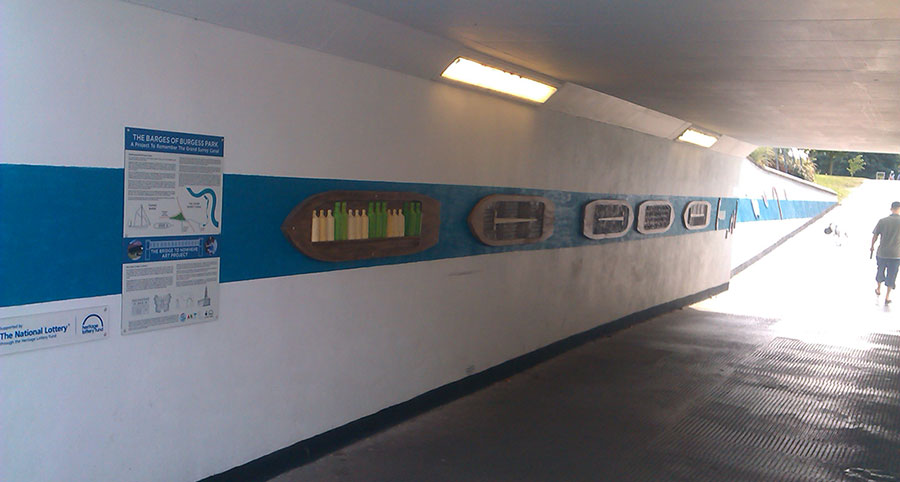
To celebrate the completion of our project we invited everyone who had been involved to come along for the grand “reveal” of the underpass installation and the launch of the heritage trail.

Photo of the barge plaques in the  underpass
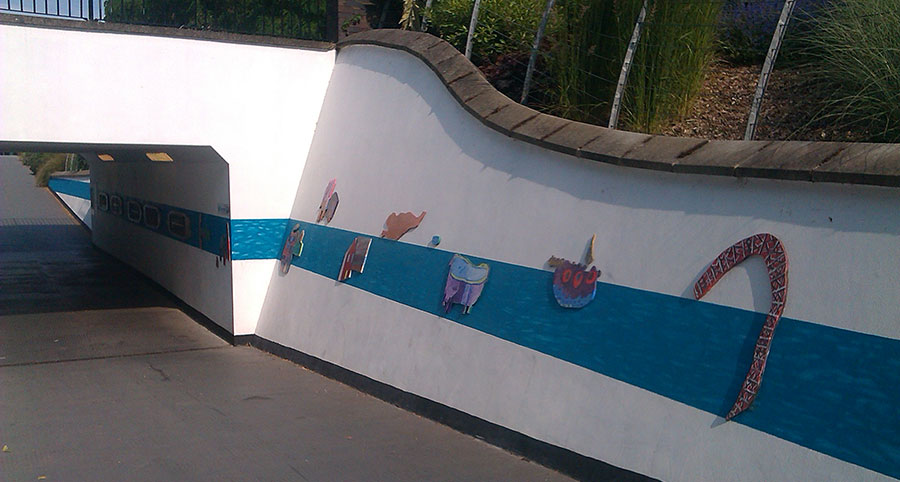
Underpass: Burgess Barges art Installation

photo of the underpass plaques

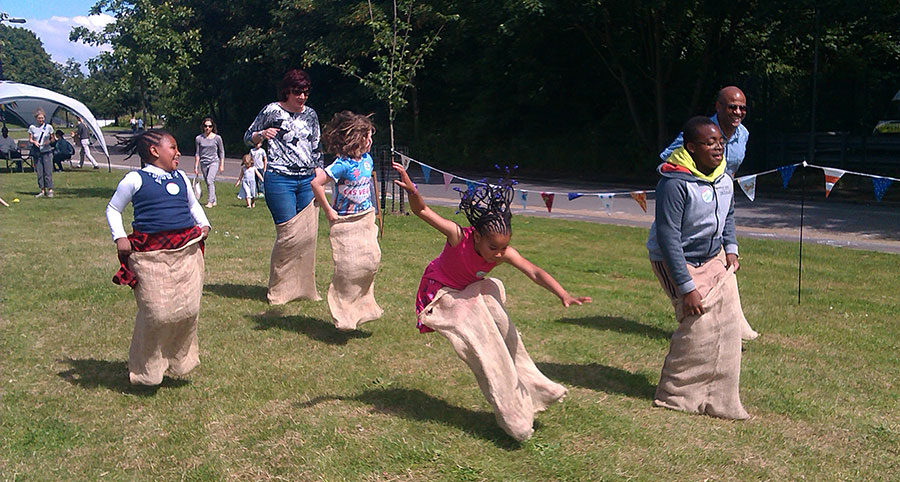
We had stalls and activities aimed at children as well as the promenade walk along the heritage trail.

Photo of the sack race
Families at the launch day

We were delighted that children who had taken part in the schools story-telling project and the Art in the Park workshops came along as well as people who had helped to make the heritage trail.

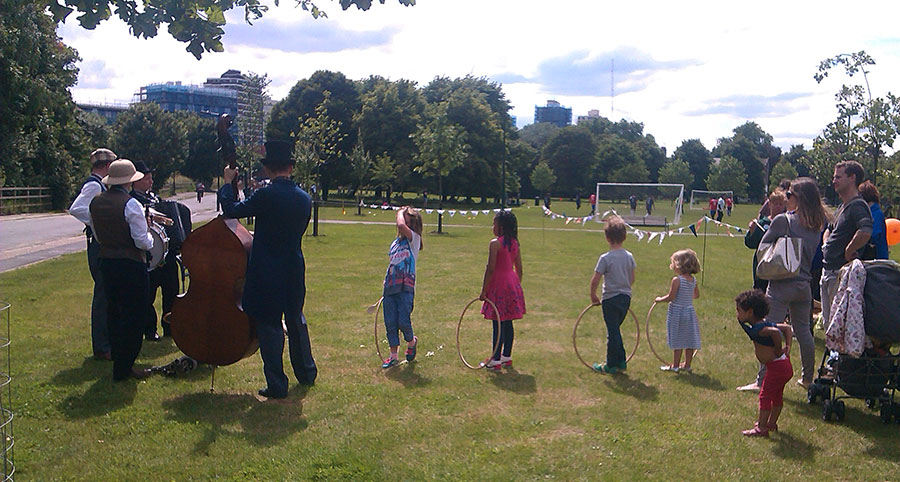
photo of the band and children
The entertainment at the launch: heritage band and hoop games.

We estimate about 300 came along and took part in the launch activities: children’s races, flag making, brick making, popcorn and lemonade stall and heritage stall displaying more materials. Plus, there were more people who stopped to examine our pop-up map exhibition hanging in the trees.

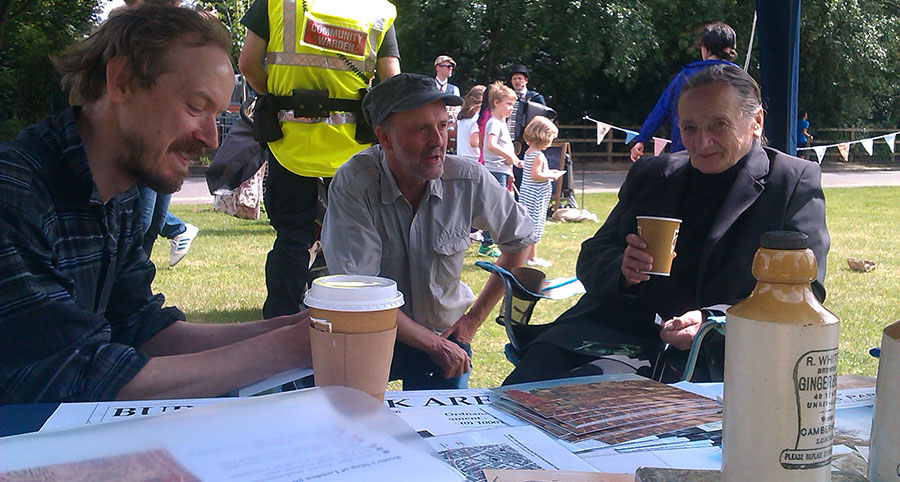
Photo of the Friends of Burgess history enthusiasts with an old R Whites' ginger beer bottle.
Friends of Burgess Park heritage stalwarts: Jon, Andrew and Joyce.

Thank you so much to everyone who took part. We couldn’t have completed this project without your enthusiasm, energy and expertise. Well done to all.

You can read more about what happened on the launch day here.

7 June 2014

Industries on the Grand Surrey Canal

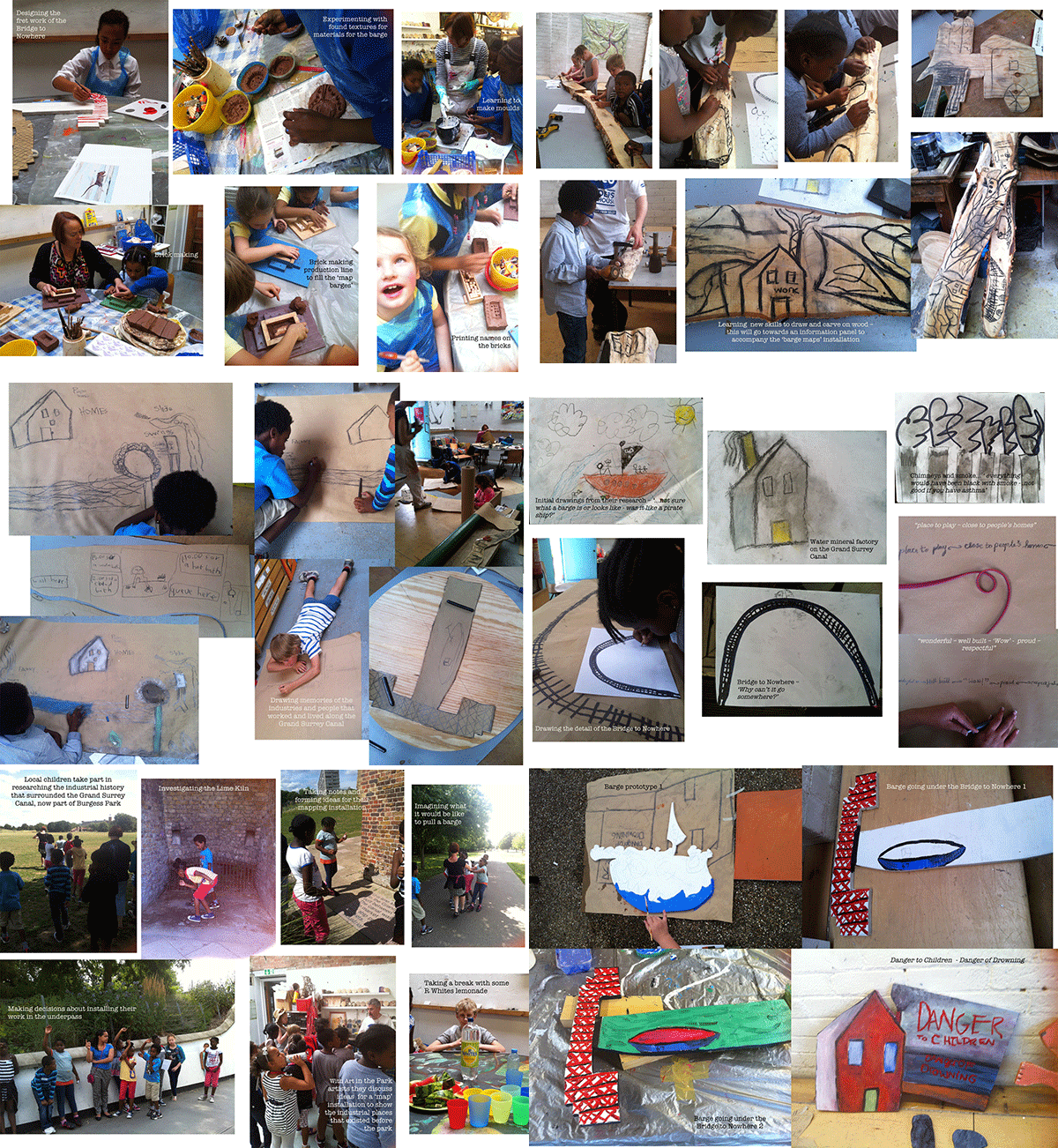
Bridge to Nowhere children's art workshops Local children took part in researching the industrial history that took place in and around the Grand Surrey Canal which once ran through what is now part of Burgess Park. Their ideas and endeavours will result in an art installation in the underpass in the park with the help of local artists’ group ‘Art in the Park’.

Photo of children investigating the width of the Grand Surrey Canal

Telling the story of the park

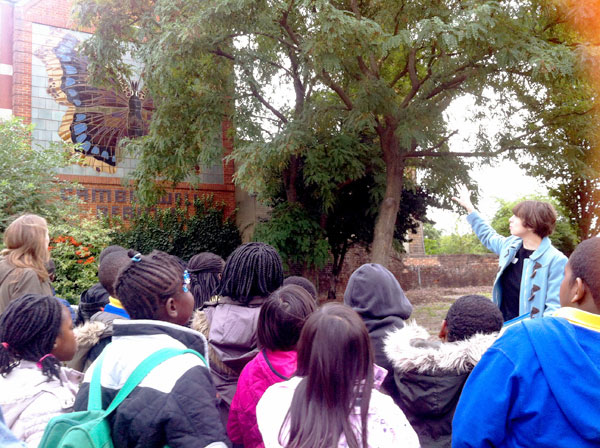
Year 5 pupils from Michael Faraday School  and Gloucester Primary explored Burgess Park to learn about its history with local storyteller Vanessa Wolf.

Tiled image of the Camberwell Beauty butterfly
Learning about the Camberwell Beauty tiled picture on the side of the Old Baths House on Wells Way

The storytelling walk helped the children discover what the park would have been like before and after the war. They had to imagine the park as it would have been – full of houses, shops, factories and a canal. The storytelling sessions involved lots of role play, singing, creative writing, tasting and smells!

See more pictures of the children touring the park.

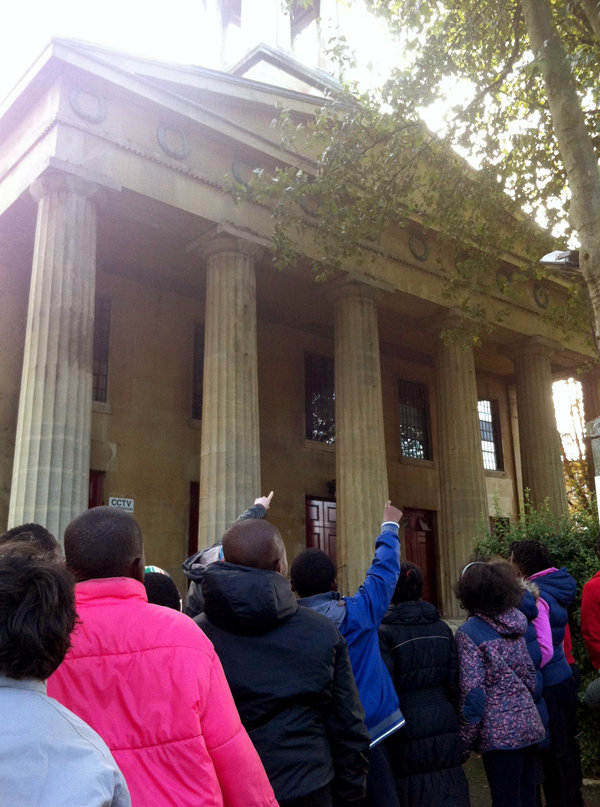
St George's Church
Formerly St George’s Church, this building stood next to the Camberwell branch of the Surrey Canal

Woollen bracelets on a girl photo

Wow! Run an event in Jowett Street Park and you get a response to remember

The traditional craft workshops run by Friends of Burgess Park as part of their history project Bridge to Nowhere were greeted with such enthusiasm and a desire to learn craft skills especially knitting. The word got about and well over 30 people took part on the last day and the big question was “When will the next workshop be?”

Over three days, participants got the chance to try out traditional hand sewing, embroidery and knitting , and on the last day, to have a go at canal style art. Most of the people taking part were born long after the canal closed, but were interested to learn more about it through the art work reference materials.

Jowett Street Park sits next to what was a spur of the Grand Surrey Canal which ran to Peckham from the Surrey Docks. It was a lovely friendly setting for the event. We were blessed with great weather and the support of Quadron staff who brought along the tables and gazebo each day. We were also very grateful to The Sojourner Truth Centre who allowed use of their facilities. A big thank you to them and to all the hard working volunteers.
Heritage Lottery Fund logo


Useful links

Fabric shop in Lewisham
https://rollsandrems.com/

For just about everything you need for crafts
https://www.homecrafts.co.uk/Sewing-and-Haberdashery/

Lovely site showing you all the embroidery stitches
https://www.embroidery.rocksea.org/